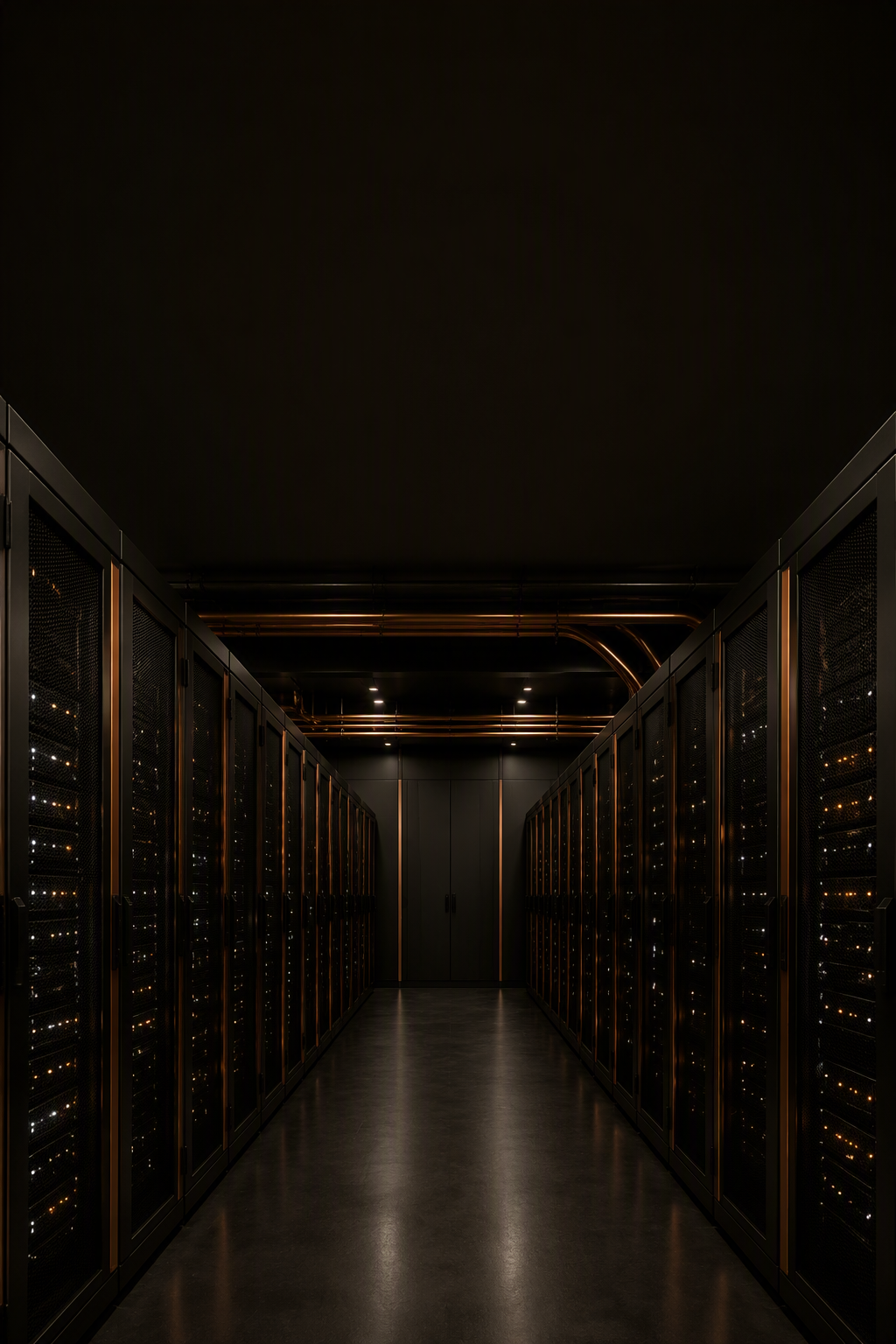
Busway & Busbar
Copper distribution from 100 A to 6300 A — busway that turns power delivery into plug-in infrastructure.
Why busway won the AI data hall
AI rack power density has crossed 120 kW per cabinet, making liquid cooling mandatory and turning floor-level power distribution into a bottleneck. Busway removes fixed cable trays and lets operators repurpose tap-off positions as GPU clusters move. Jintian Copper H1 profit rose 204% on copper busbar for AI servers, confirming how fast the busbar supply chain shifted toward high-current data hall products.
Legrand XCP and Schneider I-Line busway systems now reach 6300 A, type tested to IEC 61439-6. For procurement managers, that means one 6300 A trunk can replace dozens of parallel cable runs and cut installation labor on the white-space floor. Guangdong computing-hardware factories are booked into next year, so locking busway slots early avoids losing the data hall schedule. Sourcing early from audited Shenzhen factories aligns drawings, tap-off units, and UL 857 listings before the schedule compresses.
Busway matrix
| Parameter | Value |
|---|---|
| Current range | 100 A to 6300 A |
| Standard runs | Straight, elbow, tee, riser, transformer tap |
| Construction | Compact insulated sandwich or air-insulated |
| Conductor | Copper or aluminum; tin/silver plating |
| Tap-off pitch | 500–1000 mm; plug-in units 16–630 A |
| Type-test standard | IEC 61439-6 |
| US listing | UL 857 for busway and tap-off devices |
| Pricing basis | LME copper index plus fabrication margin |
| Cast resin sections | Optional for humid, outdoor, or corrosive paths |
| Monitoring | Optional temperature and voltage tap sensors |
Cast resin vs open bar
Open bar busway is typically air-insulated and allows tap-off points every 500–1000 mm without cutting power. It fits white-space GPU halls where rapid repopulation matters more than sealed enclosures, but requires clean, dry ambient air and restricted access zones. Cast resin sections encapsulate conductors in epoxy or polyurethane, improving IP ratings and chemical resistance, and are often used for riser or outdoor transitions.
Both approaches are type tested to IEC 61439-6 and can be UL 857 listed where US inspectors require that path. Mixed runs use open bar in the data hall and resin sections for humid or outdoor paths, preserving one continuous busway system from 100 A to 6300 A. This is why many AI data halls standardize on hybrid open bar plus resin, with one bill of materials.
- Open bar: tap-off every 500–1000 mm without shutting the bus
- Cast resin: sealed enclosures rated for humid and outdoor paths
- Hybrid runs: 100 A to 6300 A mixed open and resin sections
- Standards: IEC 61439-6 type tested, UL 857 listed
- Pricing: LME copper index plus fabrication margin
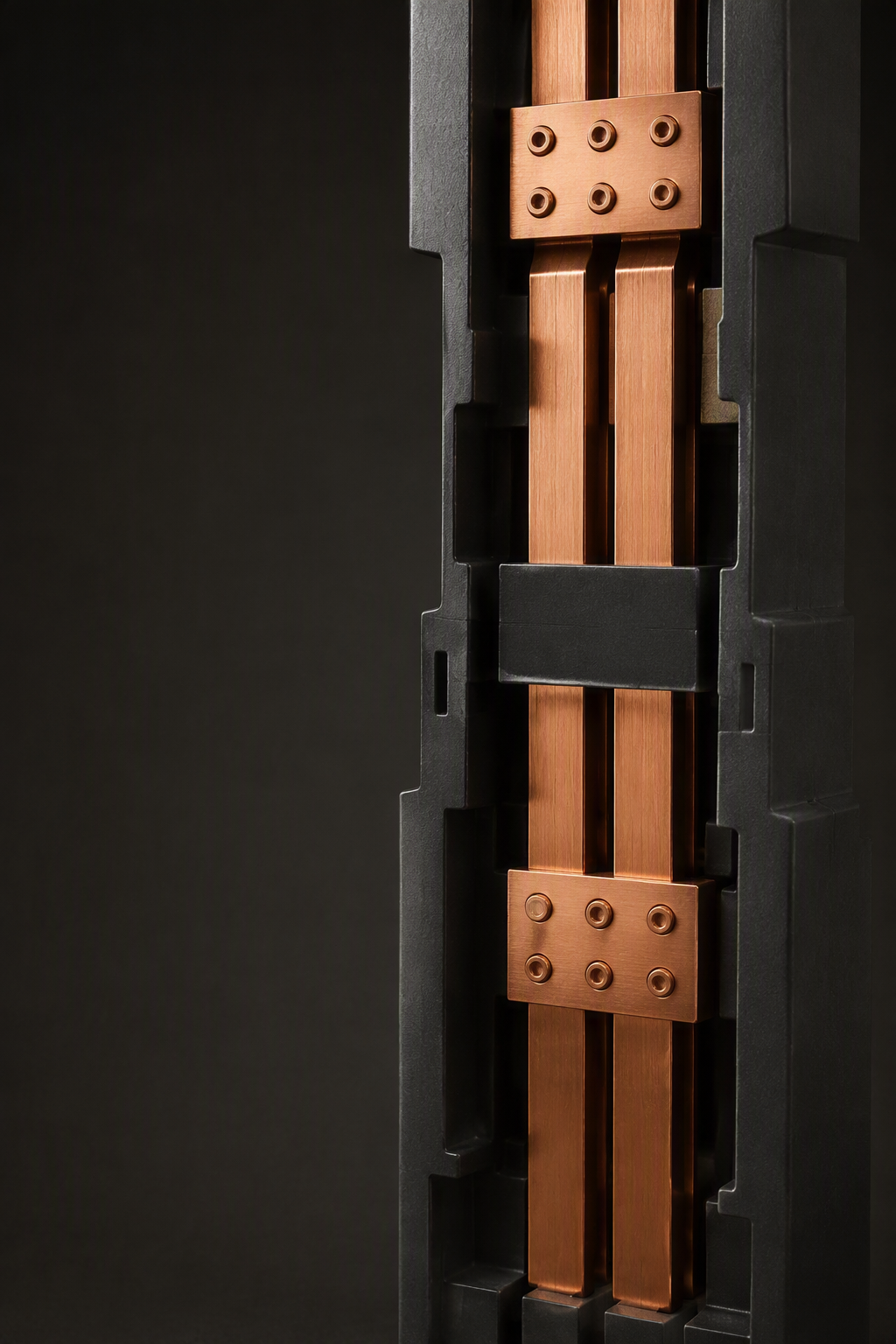
Busway & busbar categories
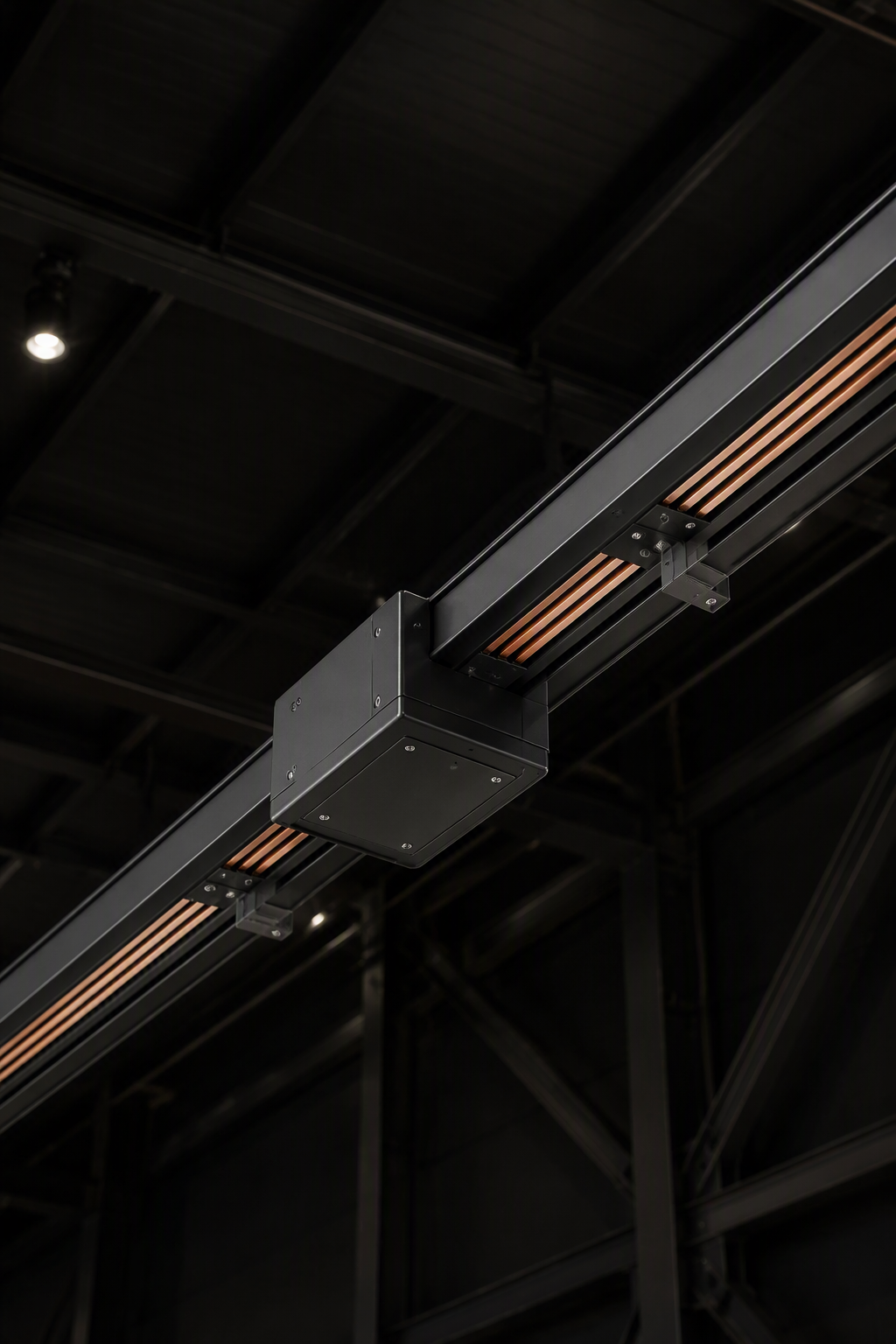
Busway Trunking
Straight, elbow, tee, and riser sections from 100 A to 6300 A with plug-in tap-off units for AI white space.
VIEW PAGE →Rack Busbar
48V ORv3 rack-level busbar for GPU trays where 12V distribution can no longer deliver clean power.
VIEW PAGE →Copper vs Aluminum
Current density, weight, conductivity, and LME pricing trade-offs for data hall busbar and riser runs.
VIEW PAGE →Frequently asked
Move power as plug-in infrastructure
Busway from 100 A to 6300 A gives procurement teams a future-proof alternative to cable trays. Lock your tap-off pitch, standard, and LME terms before the next data hall capacity cycle.