Rail & Metro
Certification cycles are long — start the rail power sourcing clock early for EN 50155 cabinets and wayside distribution.
EN 50155 and long certification cycles
Rail procurement does not begin at award; it begins at certification. EN 50155 power equipment for rolling stock and metro networks typically moves through type testing, environmental qualification, and project-specific documentation before first article inspection. Teams that wait until installation design release add avoidable schedule risk.
The sourcing clock is already against you. Transformer lead times reached 160 weeks globally, so traction and station power teams are locking suppliers earlier, often before final electrical design freeze.
Rail requirement map
| Requirement | Sourcing response |
|---|---|
| EN 50155 power cabinets | Pre-vetted designs with documentation packages and long-life components |
| Vibration and shock | Ruggedized busway and PDU builds qualified for rolling stock environments |
| Wide temperature operation | Components selected for continuous high/low ambient duty in wayside and rooftop cabinets |
| Transformer lead time risk | Global lead times at 160 weeks — reserve slots before final electrical design freeze |
| High-current wayside distribution | Busway up to 6300 A, IEC 61439-6 type tested for low-impedance distribution |
| Billing-grade monitoring | PDU metering accuracy ±1% for energy attribution and condition monitoring |
| Pilot and field quantities | PDU MOQ 10–100 pcs, 15–30 day lead time from Shenzhen; no large NRE |
| Backup battery shipping | UN38.3 Class 9 sea freight for rail battery modules where backup is specified |
Program planning
- 1. Freeze modular power architecture before pulling vendor quotes so busway, PDU, and BBU scope is comparable.
- 2. Reserve transformer and busway production slots 18–24 months ahead to avoid 160-week lead times.
- 3. Specify connectors and metering at the RFI stage: C13 10 A, C19 16 A, C21 16 A hot condition.
- 4. Run qualification samples in parallel with site civil work; do not sequence type testing after construction.
Vibration and temperature
Rail environments punish every connection. Cabinets mounted in traction wayside or underframe positions see constant vibration, thermal cycling, and dust ingress; connectors and busbar joints must survive without torque relaxation.
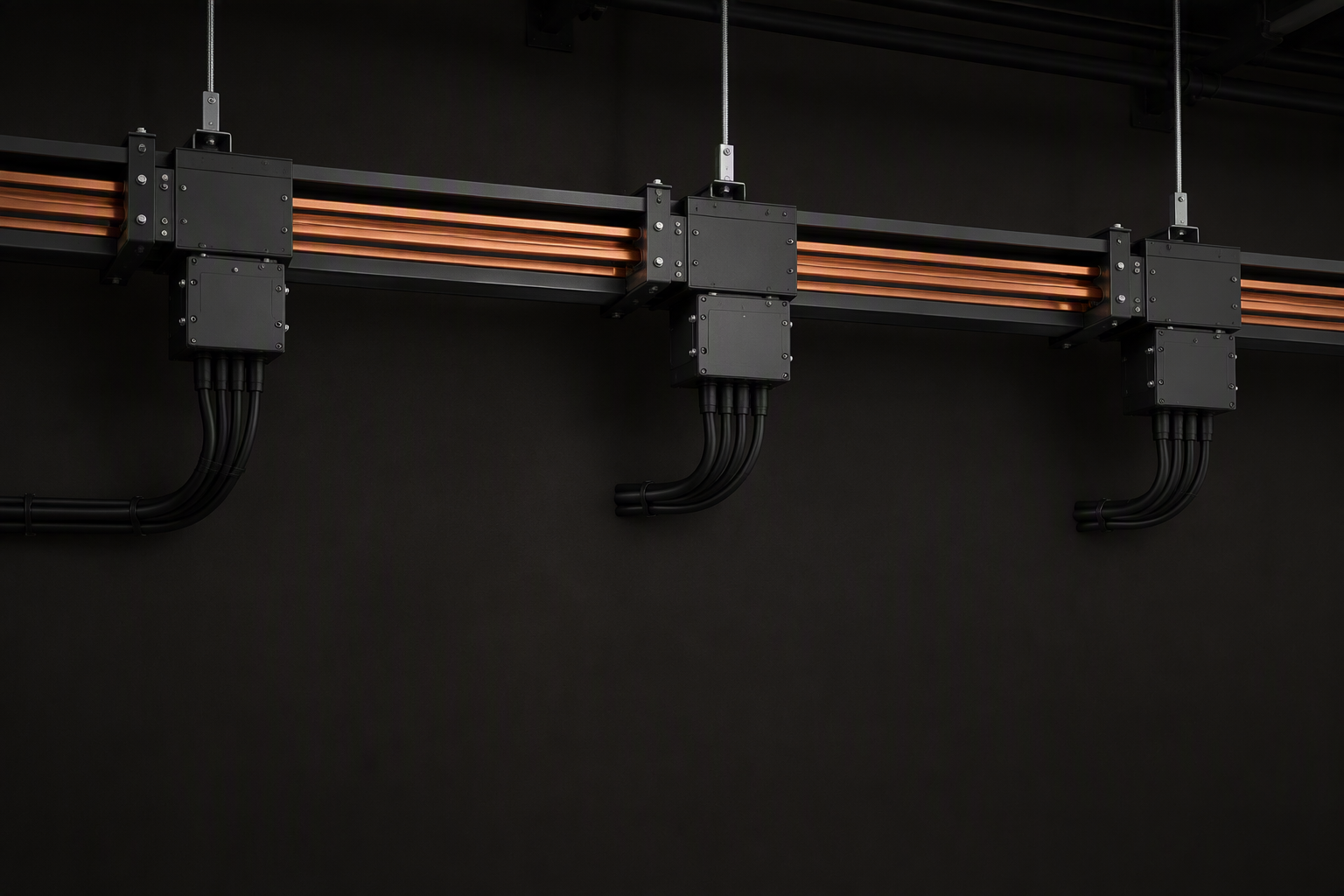
We route these projects toward busway up to 6300 A with IEC 61439-6 type-tested joints and toward PDUs with ±1% metering so thermal creep and load drift appear before failure.
- Specify EN 50155 cabinet ingress and operating temperature early
- Require vibration test reports for all busbar joints
- Use billing-grade ±1% metering for condition monitoring
- Lock logistics: large busway and battery sections move as breakbulk or Class 9 sea freight
Sourcing note
Rail certification is a schedule weapon. Buyers who source before the detailed design freeze are not gambling early; they are buying the only real cushion left in the program.